THECREATORPBL-TDLE Framework
Problem-Based Learning (PBL) through Teaching by Demonstrations and Learning by Experiments (TDLE).
PBL-TDLE is an original teaching–learning framework conceived, engineered and proven by THECREATOR Education — moving classrooms from content delivery to genuine problem solving.
From content delivery to problem solving.
The future belongs to nations that can solve problems — every product, medicine, technology and patent begins with a problem that was solved. So our classrooms make problem-solving the central daily activity, not an add-on after teaching.
A real problem is a novel situation whose solution path isn't obvious. Students must:
- Understand the situation
- Identify given information & required outcome
- Select and connect relevant concepts
- Apply them systematically
- Evaluate and justify the solution
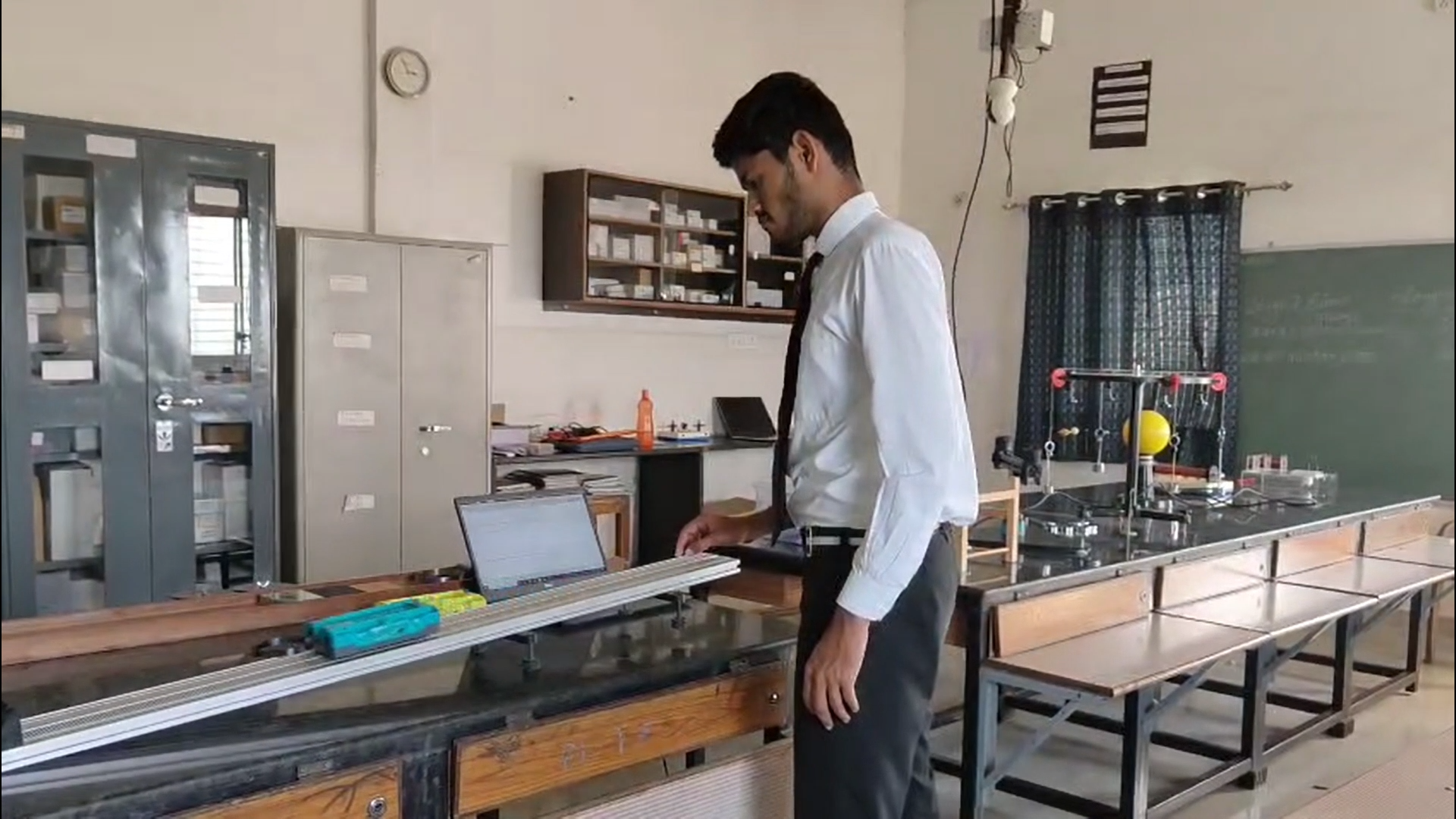
Science is learned the way swimming is — by doing it.
The teacher demonstrates each concept with real apparatus; then every student performs the experiment themselves — observing, measuring, recording, analysing and concluding. Learning becomes visible, correctable and verifiable in real time.
A single, coherent architecture for problem-based learning.
Concept Labs supply the apparatus and experiments. The CoPE-App orchestrates the daily academic plan. IDEA pedagogy keeps learning continuously assessed and corrected — together forming one integrated engine.
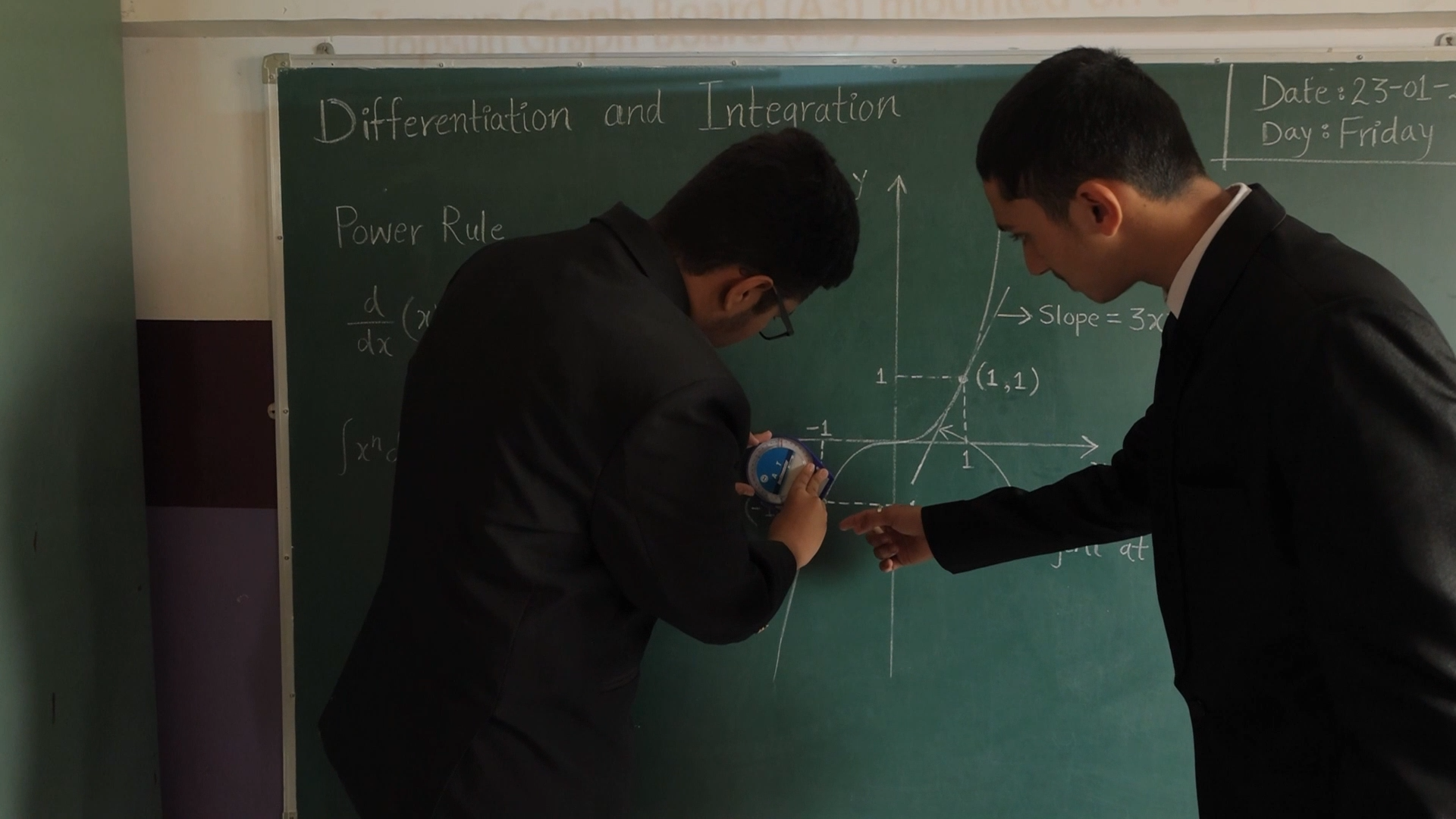
From classroom to Concept Lab — where students investigate, understand, apply and solve.
One of the fundamental innovations of PBL-TDLE is the transformation of conventional classrooms into Concept Labs — where learning shifts from passive listening to active investigation and problem solving.
Concept Labs are equipped with several hundred global-standard scientific apparatus and several thousand carefully designed experiments spanning from Upper Kindergarten (UKG) to Grade 12. Students investigate, observe, measure, analyse, interpret and verify scientific and mathematical concepts through direct experience.
For the secondary section, dedicated Concept Labs are available separately for Physics, Chemistry, Biology and Mathematics. In the primary section, every classroom itself functions as a Concept Lab — a fully equipped space where students continuously learn through demonstrations, experiments, observations, measurements and problem solving.
Hundreds of apparatus. Thousands of experiments. Every concept. Every student.


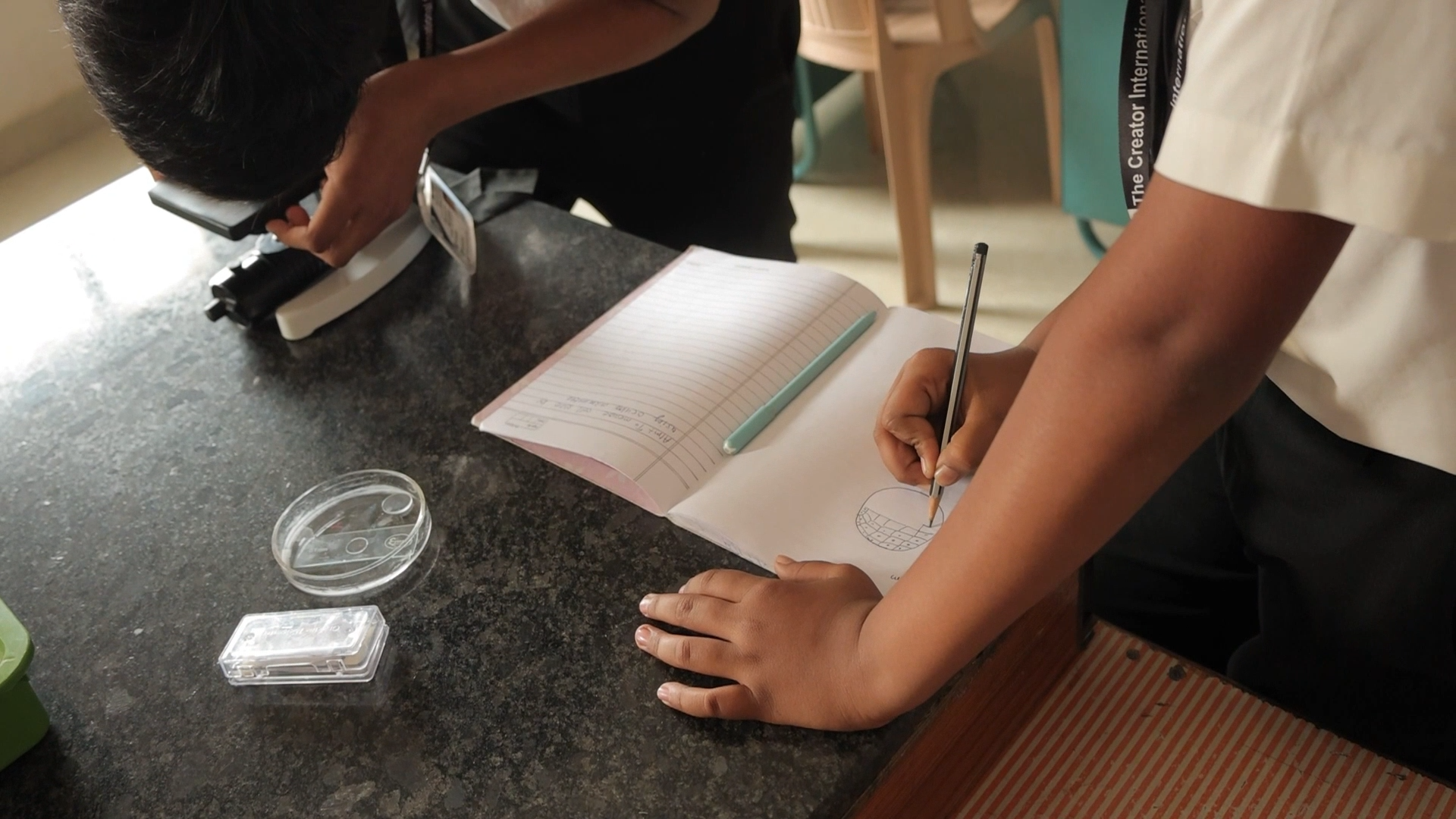

An AI-powered academic engine — one CoPE-App per unit, per subject, per class.
The CoPE-App is our proprietary cloud lesson-plan engine. For every unit in Physics, Chemistry, Biology and Mathematics — and for every class from Grade 1 to Grade 12 — the platform generates a purpose-built CoPE-App that bundles the four things a teacher actually needs to run a Concept Lab.
Concepts
Build strong conceptual foundations
Concepts are the ideas, laws and principles of science and mathematics. They must be developed — not merely known — because they must be applied in problem solving. For every topic, unit and chapter, the required concepts are identified from the curriculum prescribed by the board and included in the CoPE-App.
See the concept in action
Explore it through experiments
Observe, measure and confirm
Link concepts to real life
Real-life, open-ended problems
Develop analytical thinking & problem solving
Problem solving is the process of applying concepts to find solutions to new and unfamiliar situations. The CoPE-App's problem bank of 10,000+ newly created, real-life, open-ended problems trains students to apply concepts. Each problem is engineered around the concepts to be developed and applied in that specific topic.
Understand the problem and given information
Identify and connect the required concepts
Plan and execute a logical solution
Present, verify and improve the solution
Experiments for investigation & verification
Learn by experimenting — observe, measure, verify
Experiments let students investigate, observe, measure and verify every concept through direct experience. Thousands of experiments — designed by research scientists — develop every concept for learners aged 5 to 18 across Physics, Chemistry, Biology and Mathematics.
Study phenomena carefully
Collect accurate scientific data
Interpret results, graphs and patterns
Confirm and master the concept
Global-standard scientific apparatus
Every classroom becomes a Concept Lab
Apparatus transform every classroom into a Concept Lab. The CoPE-App integrates 1,500+ globally standardised scientific apparatus that develop concepts across Physics, Chemistry, Biology and Mathematics — turning ordinary rooms into fully equipped labs.
Apparatus available in every classroom
Perform hands-on investigations
Collect accurate and reliable data
Develop and master every concept
A CoPE-App for every unit — every subject × every class.
4 subjects × 12 grades × dozens of units per grade — every cell has its own CoPE-App, pre-loaded with the concepts, problems, experiments and apparatus for that specific unit.
| Subject / Class | G1 | G2 | G3 | G4 | G5 | G6 | G7 | G8 | G9 | G10 | G11 | G12 |
|---|---|---|---|---|---|---|---|---|---|---|---|---|
| Physics | ||||||||||||
| Chemistry | ||||||||||||
| Biology | ||||||||||||
| Mathematics |
The AI that reads the cohort — before the teacher writes the lesson.
Sitting behind the CoPE-App is an AI-based diagnostic system that maps every student's understanding of every concept — surfacing strengths, gaps and misconceptions across the whole cohort before teaching even begins. The next lesson is then written to fix precisely what the data says.
Concept-level diagnostics
The AI engine maps every student's understanding of every concept before teaching begins — surfacing strengths, gaps and misconceptions at the cohort level.
Real-time formative assessment
Every problem, every experiment and every response is logged. Mastery of each subtopic is scored continuously — not left to end-of-term exams.
Personalised lesson planning
The next lesson is generated per cohort — reinforcing weak concepts, escalating strong ones — so the teacher walks in with a plan the AI has already tailored.
Transparent dashboards
School leaders, teachers, parents and students all see the same signal: which concepts are mastered, which are not, and what will be worked on next.
Teacher-independent, system-driven learning. The CoPE-App creates a fully integrated ecosystem — connecting teachers, students, parents and school leaders on a single platform — ensuring complete transparency, continuous formative assessment, concept mastery and problem-solving excellence for every student.
Three tiers of problem solving — Foundation, Analytical, Olympiad-grade.
Foundation & Curriculum
Curriculum-level problems that build conceptual understanding and first application.
Advanced & Analytical
Higher-order problems requiring the integration of multiple concepts.
Olympiad & Research
International Olympiad, advanced-entrance and real-world innovation-level challenges.
Identification
Diagnose the concept and the specific learning objective for each subtopic at the cohort level.
Walk one open-ended problem through the IDEA loop.
A steel ball is released from rest at the top of a 45 m tower. Ignoring air resistance, how long does it take to reach the ground? (take g = 10 m/s²)
Which concept governs this situation?
One subtopic, one full PBL-TDLE cycle.
A walkthrough of a Grade-10 Physics lesson on Pascal's Law — from diagnostic to mastery, in a single sitting.
Diagnose the cohort's current understanding of pressure and fluids via the CoPE-App. Target subtopic: Pascal's Law.
Teacher runs a live Pascal's Law demonstration — force multiplication across two connected pistons — with real apparatus.
Every student measures force, area and displacement across configurations, records data, and computes P = F/A themselves.
Students compare measured vs predicted values, discuss error, and confirm the law under multiple loads.
Cohort tackles Level-1 problems (hydraulic lift design), then a Level-2 open problem (multi-stage press with efficiency loss).
CoPE-App logs per-student mastery of the subtopic and flags anyone who needs reinforcement — before the next lesson.
Problem as the starting point to train problem-solving
Concepts at the centre — training to develop and apply
Experiments to develop concepts through investigation and verification
Every student, every concept — mapped by an AI-based diagnostic, developed and verified in the classroom itself, learning fully verified
Development and application of concepts in the classroom itself
IDEA Pedagogy — Identify Problem, Develop the concept, Execute the problem, Assess the solution
CoPE-App integration of concepts, experiments, problems and apparatus to create tailor-made lesson plans
Measurable & Verifiable learning for every student
Same subject. Same syllabus. Entirely different classroom.
From partnership signed to first PBL-TDLE cycle — in ten weeks.
Procurement & Onboarding
Cohort-level concept diagnostics. Teacher orientation on IDEA pedagogy and the PBL-TDLE philosophy.
Concept Lab Setup
Installation of globally standardised apparatus. Teachers rehearse first-term demonstrations subtopic by subtopic.
Curriculum Concept Mapping & CoPE-App Design
The school and board curriculum is mapped for the concepts; problems and experiments are then designed by choosing the appropriate apparatus sets.
First PBL-TDLE Cycles
First PBL-TDLE cycles run with faculty. Observe → Investigate → Measure → Analyse → Verify → Apply.
Deep Practice + NTP
Level-2 and Level-3 problems, olympiad tracks and NextGen Training Program integration for high-potential students.
“PBL-TDLE is based on the fundamental principle that every student who actively engages in learning can develop concepts and become a successful problem solver, irrespective of their inherent talent or starting ability.”
Engage to Learn & Learn to Innovate