If nations become powerful through innovation and problem solving, then our classrooms must become places where students learn not only concepts but also how to apply those concepts to solve meaningful problems.
Education should not stop at the delivery of information. It should develop thinkers, innovators, researchers, inventors, and future leaders who can create solutions for society, industry, and humanity.Therefore, our classrooms must be designed to cultivate curiosity, investigation, critical thinking, experimentation, innovation, and problem solving from an early age.
Students who learn to solve problems today become the innovators, researchers, entrepreneurs, and nation-builders of tomorrow.
If Innovation is the Goal, Problem Solving Must Be the Curriculum
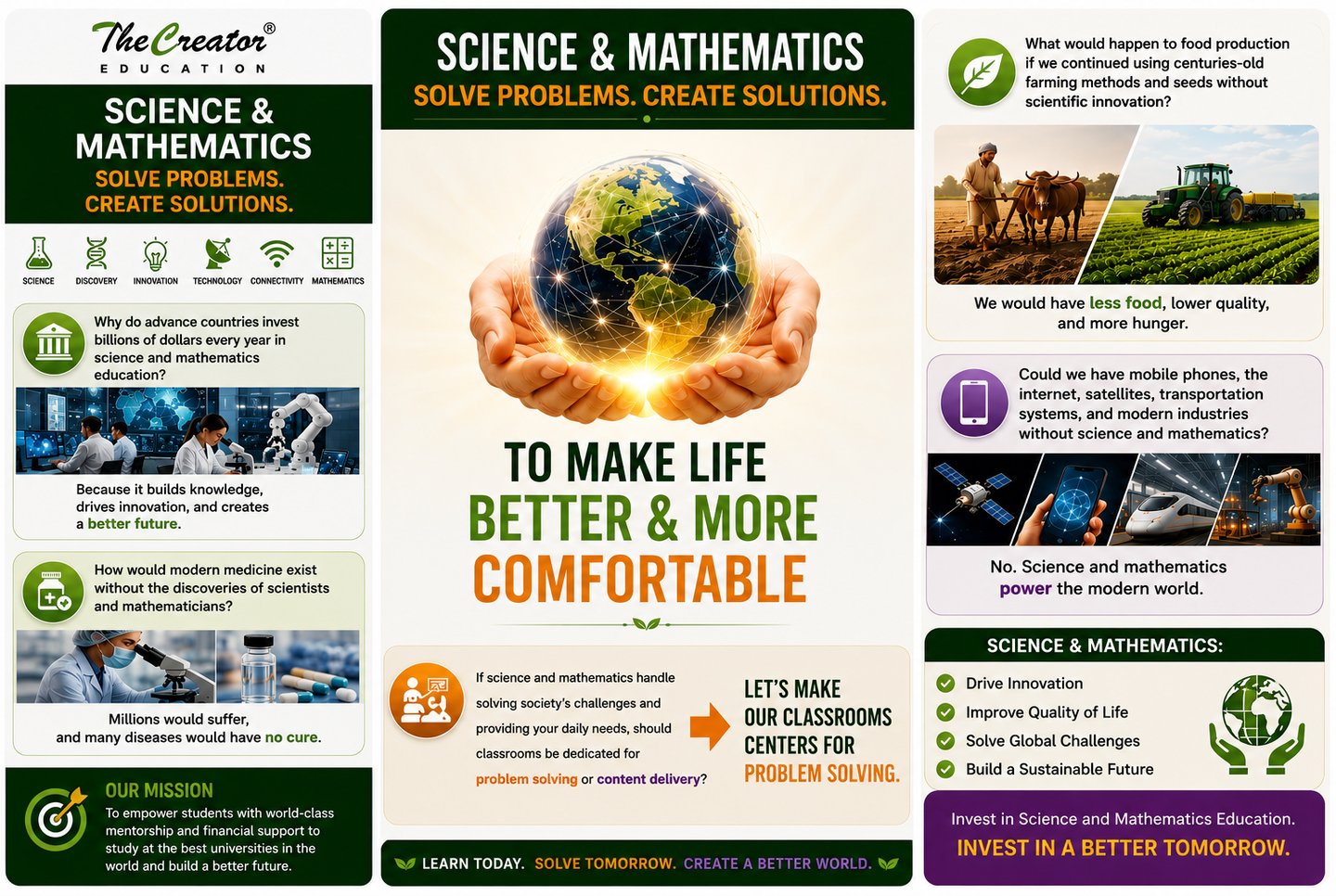
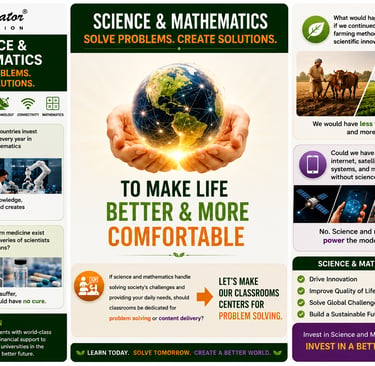
Every product we use in our daily lives is the result of a problem being solved.
The food we eat, the clothes we wear, the medicines we take, the vehicles we drive, the gadgets we use, the internet that connects us, artificial intelligence, and every modern industry exist because someone identified a problem and developed a solution.
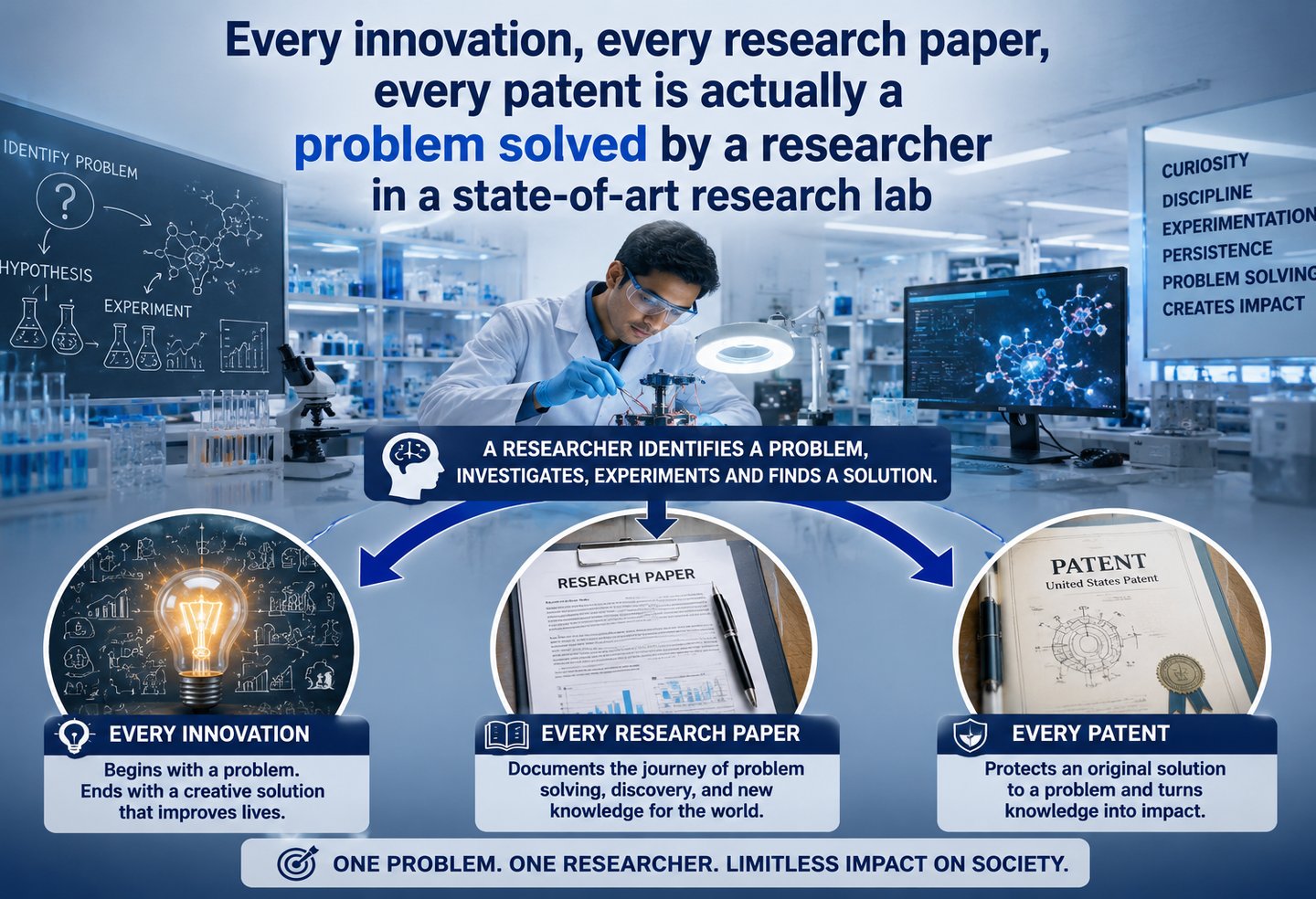
Research laboratories across the world continuously solve real-world problems and transform those solutions into innovations, technologies, products, and patents. Every patent represents a problem that has been successfully solved. Nations such as the United States, China, Japan, South Korea, and Germany have built their economic and technological strength through generations of innovators, scientists, engineers, and entrepreneurs trained to solve complex problems.
Why Problem Solving Matters
The future belongs to nations that can solve problems.
Example of a Real Problem
A rescue drone must deliver medicines across a river during strong winds. The drone has limited battery power and must reach the destination in minimum time while carrying extra weight. Students must determine:
the effect of force, mass, and acceleration
air resistance and motion
energy consumption and power
vector components and direction
optimization of speed and path
This situation cannot be solved by memorizing one formula. Students must connect multiple concepts from mechanics, vectors, energy, and motion to design a scientifically valid solution.
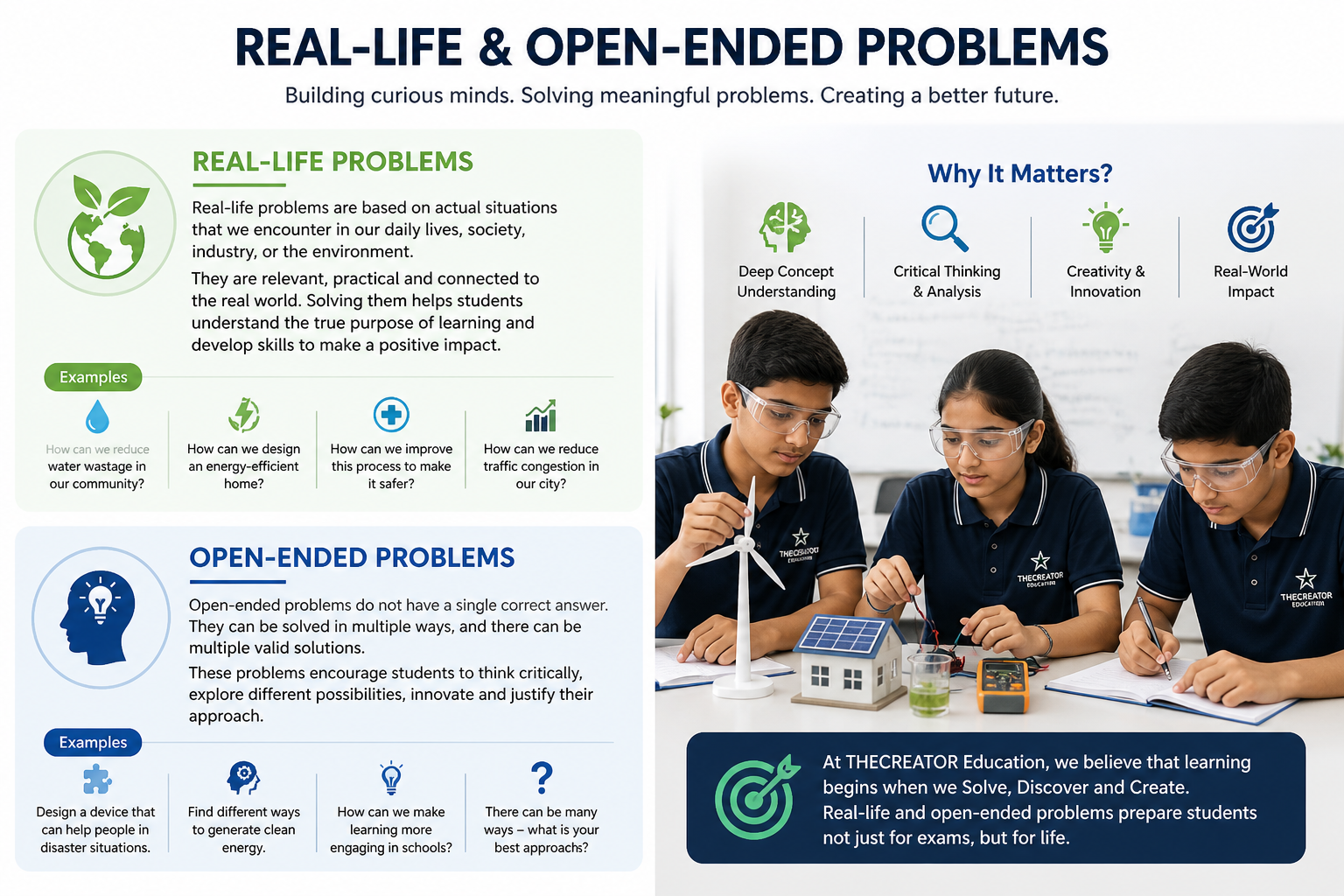
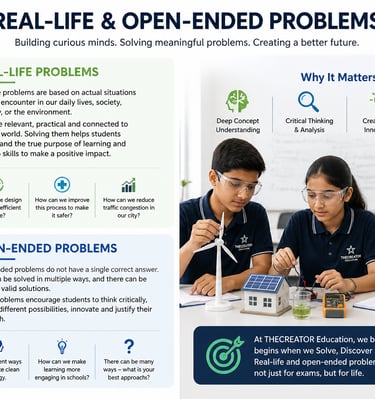
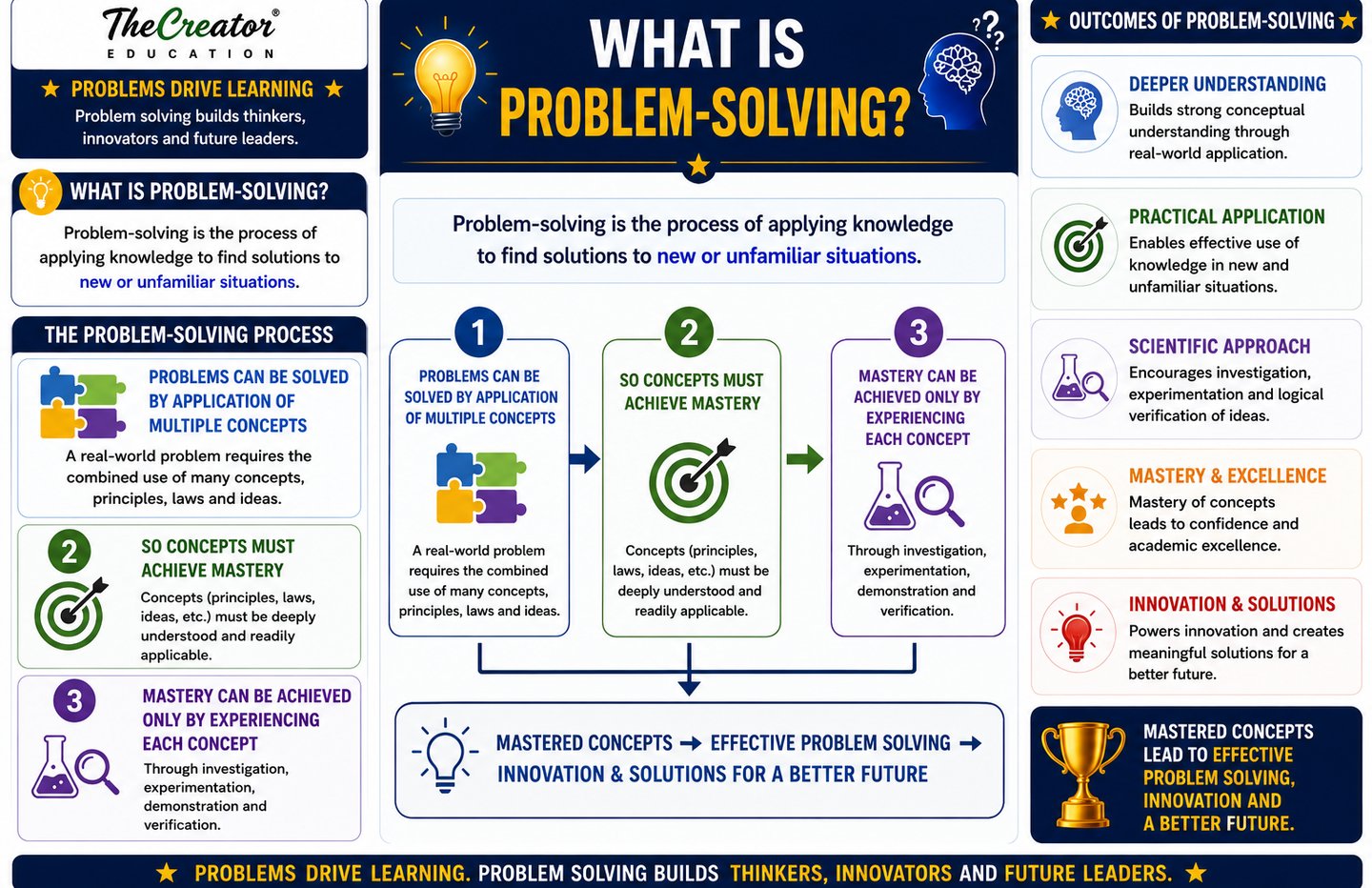
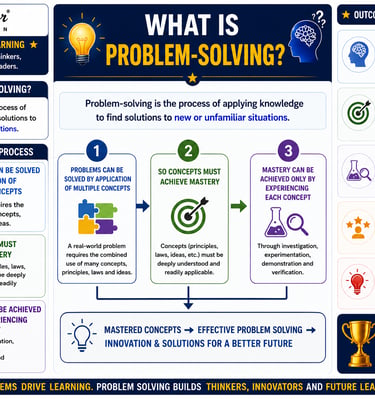
Under PBL-TDLE, problem solving is not an occasional classroom activity. It is the central purpose of every lesson, every subject, and every year throughout K-12 education. Students continuously learn to observe, investigate, analyze, reason, calculate, design solutions, and evaluate outcomes.
By transforming classrooms into Concept Labs and placing problem solving at the heart of learning, PBL-TDLE develops the innovators, researchers, scientists, engineers, entrepreneurs, and leaders who will create the solutions, technologies, industries, and discoveries of tomorrow. If we want innovation as the outcome, then problem solving must become the curriculum.
That is why the PBL-TDLE framework focuses on:
deep concept mastery through demonstrations and experiments
verification of concepts through investigation
application of concepts in advanced and real-world problems
development of analytical thinking and scientific reasoning
Through this process, students develop into innovators, researchers, scientists, and global problem solvers.
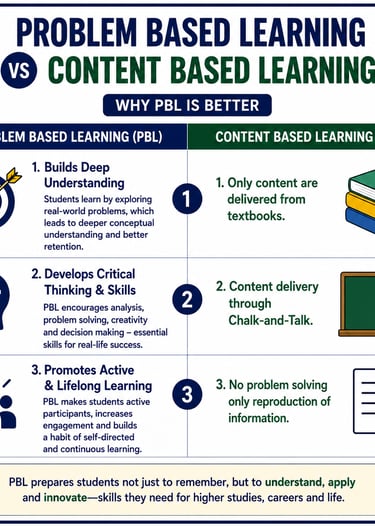
Innovation is not created through memorization, passive listening, or the reproduction of information. Innovation emerges when individuals identify problems, develop a deep understanding of the underlying concepts, and apply those concepts to create effective solutions.
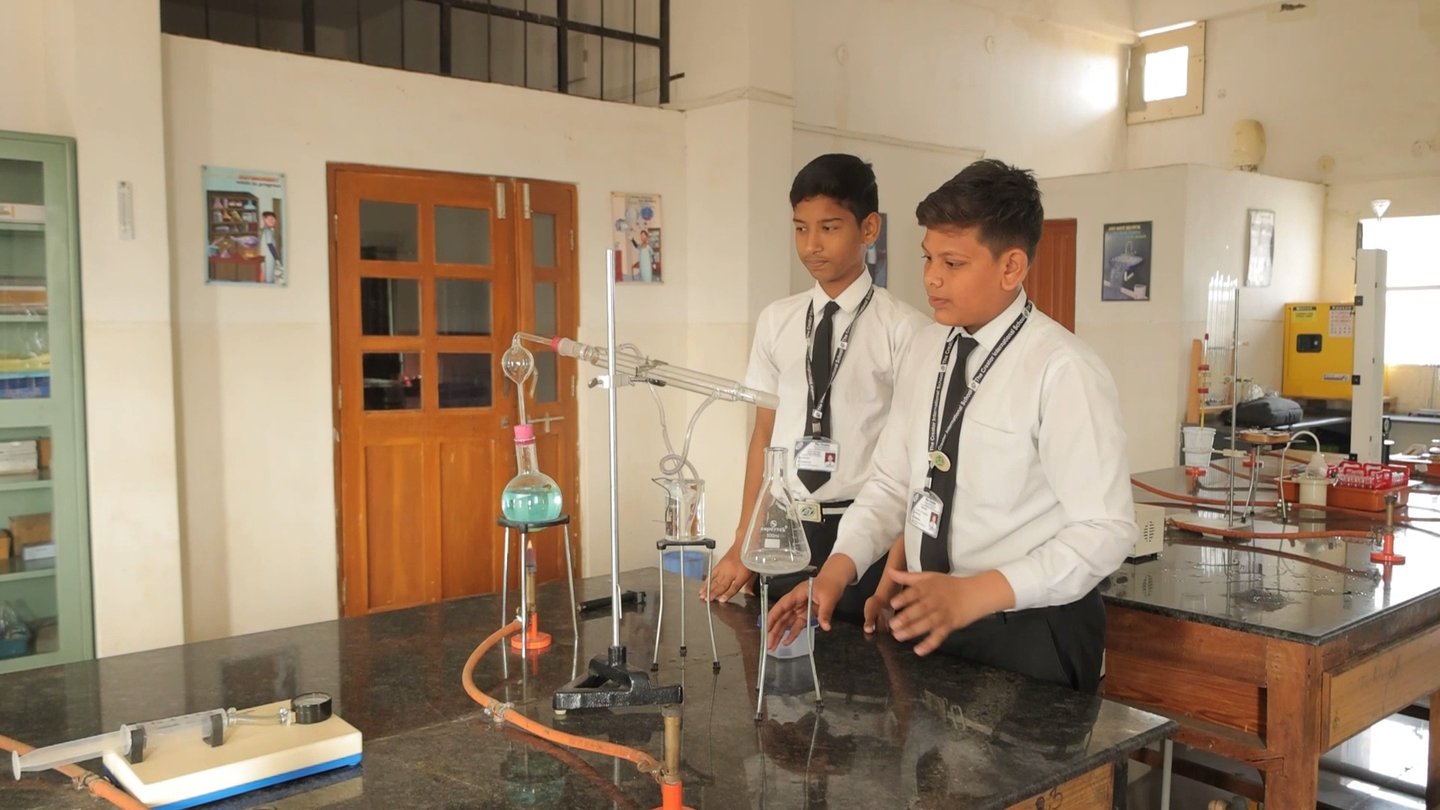
At THECREATOR Education, this belief forms the foundation of the PBL-TDLE (Problem-Based Learning through Teaching by Demonstrations and Learning by Experiments) model. Every concept is first investigated and verified through demonstrations and hands-on experiments, enabling students to develop genuine conceptual mastery. These concepts are then applied to solve increasingly complex and unfamiliar problems.
A problem is a novel or unfamiliar situation that requires the systematic application and integration of multiple concepts related to a particular subtopic in order to achieve a logical and scientifically valid solution. It demands conceptual mastery analytical reasoning, critical thinking, and the ability to connect and apply knowledge in a structured and meaningful manner.
Unlike a simple question that may require direct recall or a single formula, a real problem requires learners to think, investigate, analyze relationships, select appropriate concepts, and apply them step by step to reach a solution. Problems often involve unfamiliar situations where the pathway to the solution is not immediately obvious.
Example of a Simple Question
What is the formula for density?
Define Newton’s Second Law.
What is the value of acceleration due to gravity?
Real-Life, Open Ended Problems in School
Problem solving is the process of applying concepts, ideas, laws, and principles to analyze, investigate, and resolve complex real-life situations in a logical and systematic way. Every innovation, discovery, and patent is ultimately a problem solved by a researcher through observation, experimentation, analysis, and creative thinking.
Every innovation, discovery, research paper, and patent is ultimately a problem solved by someone through observation, experimentation, reasoning, and application of concepts. Real learning therefore cannot stop at memorization. Students must develop the ability to apply concepts to new and unfamiliar situations.
Problem- Based Learning
at The Creator International School
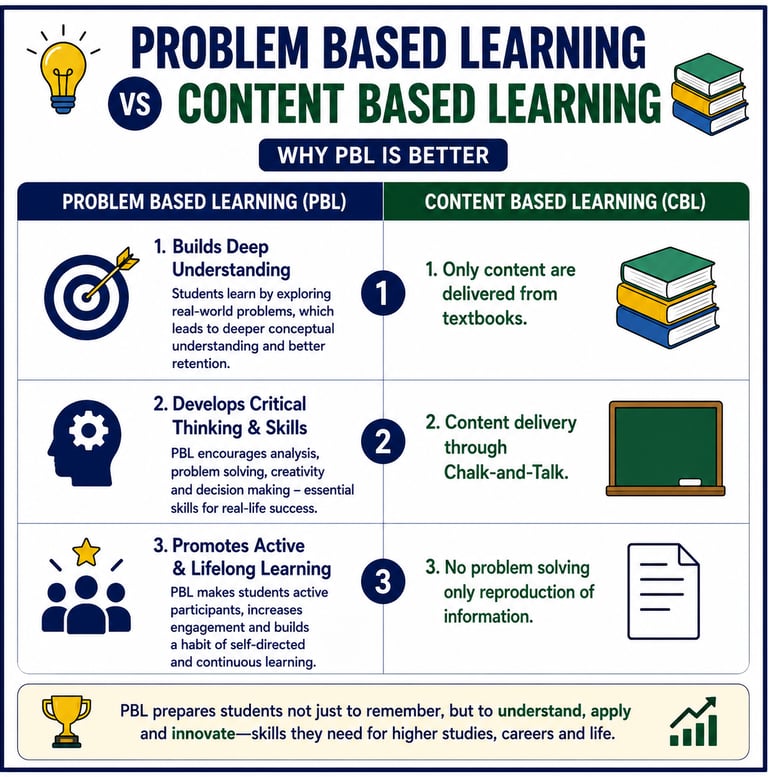
Problem-Based Learning (PBL) is an instructional methodology in which learning is initiated through real-life, open-ended, and application-oriented problems rather than conventional content delivery through lecture-based or chalk-and-talk teaching. In this approach, students first analyse and identify the problem, then systematically develop the required concepts through investigation, demonstrations, experimentation, observation, verification, and analytical reasoning before applying those concepts to construct logical and scientifically valid solutions.
At THECREATOR, this methodology has been transformed into a comprehensive classroom ecosystem through the PBL-TDLE model. Traditional classrooms are converted into Concept Labs, where students develop concepts through hands-on learning using several hundred globally standardized scientific apparatus and several thousand carefully designed demonstrations and experiments across Physics, Chemistry, Biology, and Mathematics. This enables students to achieve mastery of concepts before attempting higher-order problem solving.
To support this process, a dedicated cloud platform and centralized data centre have been developed, integrating Windows-based applications for teachers, students, and school leaders. The platform provides topic-wise access to concepts, demonstrations, experiments, apparatus, problem sets, and detailed solutions, creating a complete digital ecosystem for concept development and problem-solving.
The entire classroom follows the structured IDEA Pedagogy, consisting of four sequential stages:
Identification of the problem through careful analysis.
Development of concepts through teacher demonstrations and student experiments.
Execution of the problem by applying the developed concepts to construct logical solutions.
Assessment of the solution through self-evaluation, reflection, and teacher feedback.
The platform further enables real-time monitoring and analysis of every student's concept development and problem-solving performance. Daily learning analytics are made available to teachers, school leaders, and parents, allowing timely interventions, personalized academic support, and continuous tracking of each student's progress.
This approach closely aligns with the expectations of higher education and modern careers. Students aspiring for admission to leading universities in India and abroad must demonstrate exceptional problem-solving abilities through competitive examinations such as JEE, NEET, IPhO, IChO, IBO, IMO, AP, BPhO, AMC, and similar assessments, all of which are fundamentally problem-based. Likewise, international curricula and board examinations, including Cambridge and IB, also assess students primarily through the application of concepts to solve unfamiliar and analytical problems rather than through rote memorization.
When students develop concepts and apply them to problem solving every day in the classroom, problem solving becomes a natural skill rather than merely an examination requirement. This continuous practice strengthens critical thinking, logical reasoning, analytical ability, creativity, scientific reasoning, and decision-making. It not only prepares students for national and international examinations but also nurtures a research and innovation mindset, equipping them with the knowledge, confidence, and skills required to pursue careers in scientific research, technology, engineering, medicine, and other innovation-driven fields.
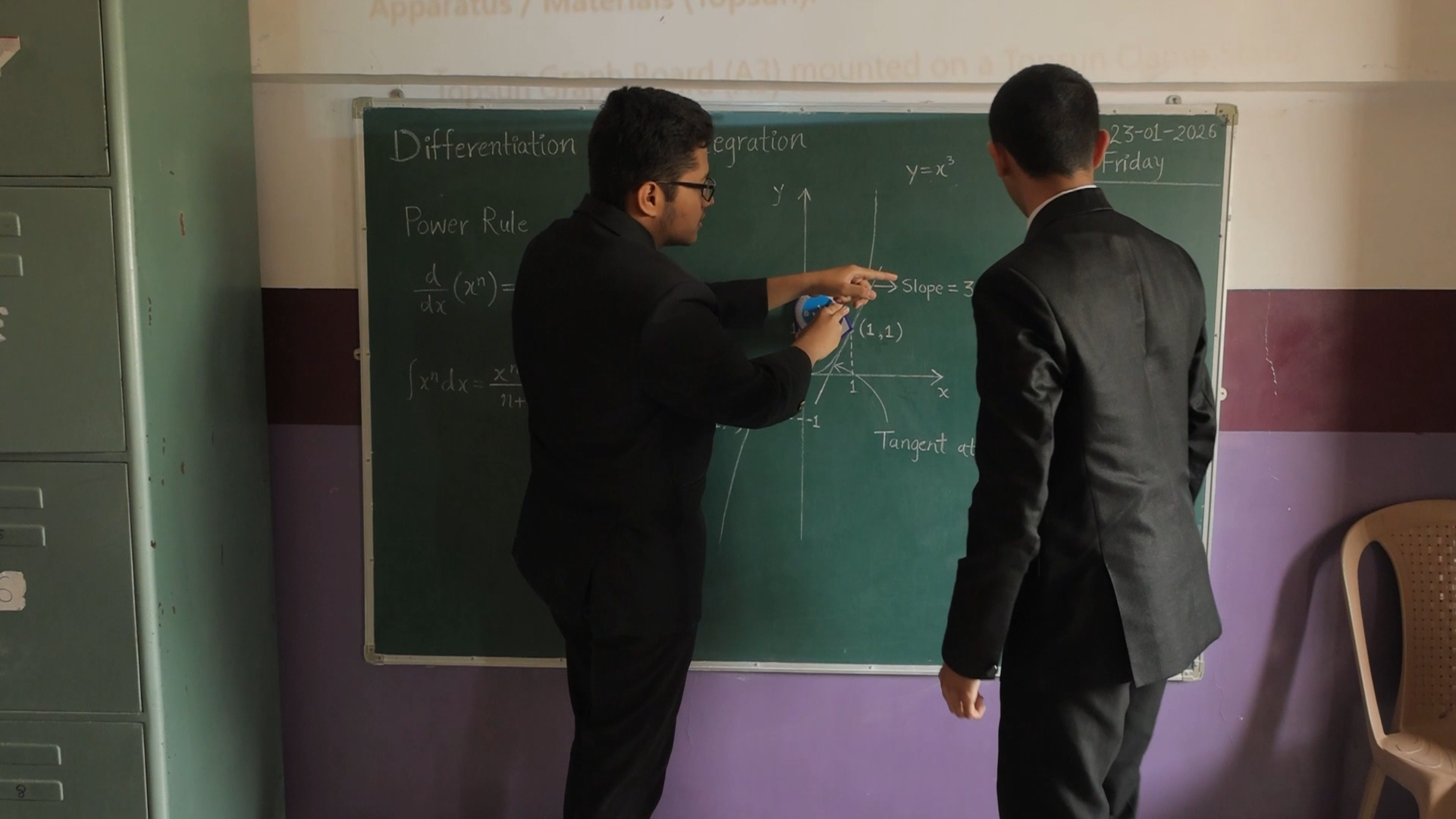
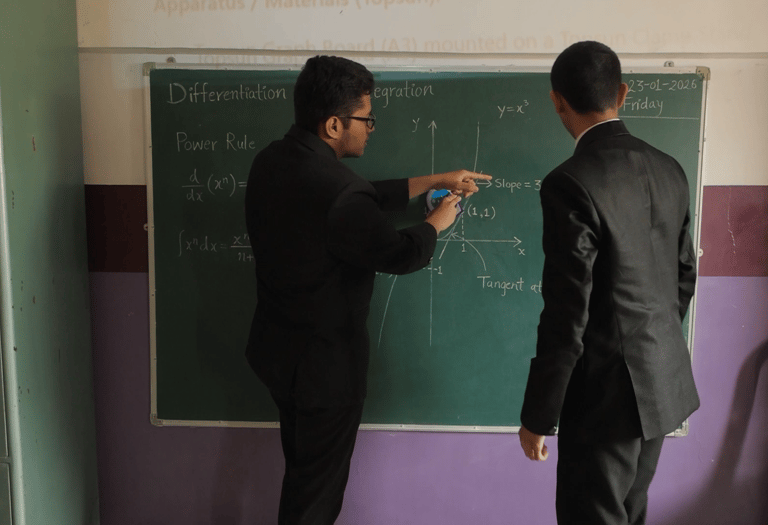
At THECREATOR Education, our mission is to develop future innovators, scientists, researchers, and problem solvers by building strong conceptual understanding through demonstrations, experiments, and advanced problem-solving training from early primary through K–12.
This approach closely aligns with the expectations of higher education and modern careers. Students aspiring for admission to leading universities in India and abroad must demonstrate exceptional problem-solving abilities through competitive examinations such as JEE, NEET, IPhO, IChO, IBO, IMO, AP, BPhO, AMC, and similar assessments, all of which are fundamentally problem-based. Likewise, international curricula and board examinations, including Cambridge and IB, also assess students primarily through the application of concepts to solve unfamiliar and analytical problems rather than through rote memorization.
When students develop concepts and apply them to problem solving every day in the classroom, problem solving becomes a natural skill rather than merely an examination requirement. This continuous practice strengthens critical thinking, logical reasoning, analytical ability, creativity, and scientific decision-making. It not only prepares students for national and international examinations but also nurtures a research and innovation mindset, equipping them with the knowledge, confidence, and skills required to pursue careers in scientific research, technology, engineering, medicine, and other innovation-driven fields.
Join THECREATOR Education
Subscribe for updates on experiments