Science is Meant to Be Done, Not Merely Learned
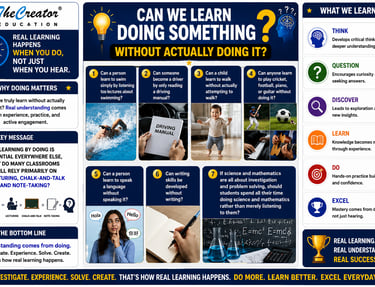
Concepts in science and Mathematics cannot be mastered through delivery of content through lectures or Chalk-and-Talk alone. Just as swimming is learned by swimming and driving is learned by driving, science is learned by observing, experimenting, analysing and solving problems.
THECREATOR PBL-TDLE framework is founded on this philosophy. It transforms classrooms into Concept Labs where students actively engage in demonstrations, investigations, experiments, measurements, data analysis and problem solving.
Learning for Doing
Teaching by Demonstration and Learning by Experiment
At PBL-TDLE, students develop concepts through teacher demonstrations and hands-on investigations, where they perform experiments, take measurements, make observations, analyse data, plot graphs, carry out calculations, and draw scientific conclusions before applying those concepts to solve real-world problems.
Classrooms are transformed into Concept Labs equipped with several hundred globally standardized scientific apparatus and several thousand carefully designed experiments covering every concept in Physics, Chemistry, Biology, and Mathematics. This experiential approach develops critical thinking, scientific reasoning, and problem-solving skills, preparing students for research, innovation, and future careers.
Concept Mastery Depends on Engagement, Not Talent.
This philosophy challenges the traditional belief that academic excellence and high-level problem-solving abilities are reserved only for naturally gifted or inherently talented students. PBL-TDLE recognizes that while students may differ in their initial abilities, backgrounds, learning pace, and prior experiences, every student possesses the capacity to learn, understand, and excel when provided with the right learning environment, appropriate guidance, and meaningful engagement.
Research in cognitive science, educational psychology, and neuroscience consistently demonstrates that learning and intellectual development are not fixed traits but dynamic processes that can be significantly enhanced through active participation, deliberate practice, guided instruction, and continuous feedback. The development of concepts and problem-solving skills depends far more on sustained engagement, perseverance, and quality learning experiences than on innate talent alone.
n the PBL-TDLE framework, learning begins with meaningful problems that stimulate curiosity and motivate students to seek solutions. Through demonstrations, hands-on experiments, observations, discussions, and guided practice, students actively construct their understanding rather than passively receiving information. This process enables students to develop deep conceptual understanding, connect ideas across disciplines, and progressively build confidence in their own abilities.
The framework draws support from established educational theories, including Csikszentmihalyi's concept of the "state of flow," Vygotsky's "zone of proximal development," and contemporary research on deliberate practice and growth mindset. These theories collectively suggest that when students are appropriately challenged, adequately supported, and actively engaged, they can achieve levels of understanding and performance that may initially appear beyond their capabilities.
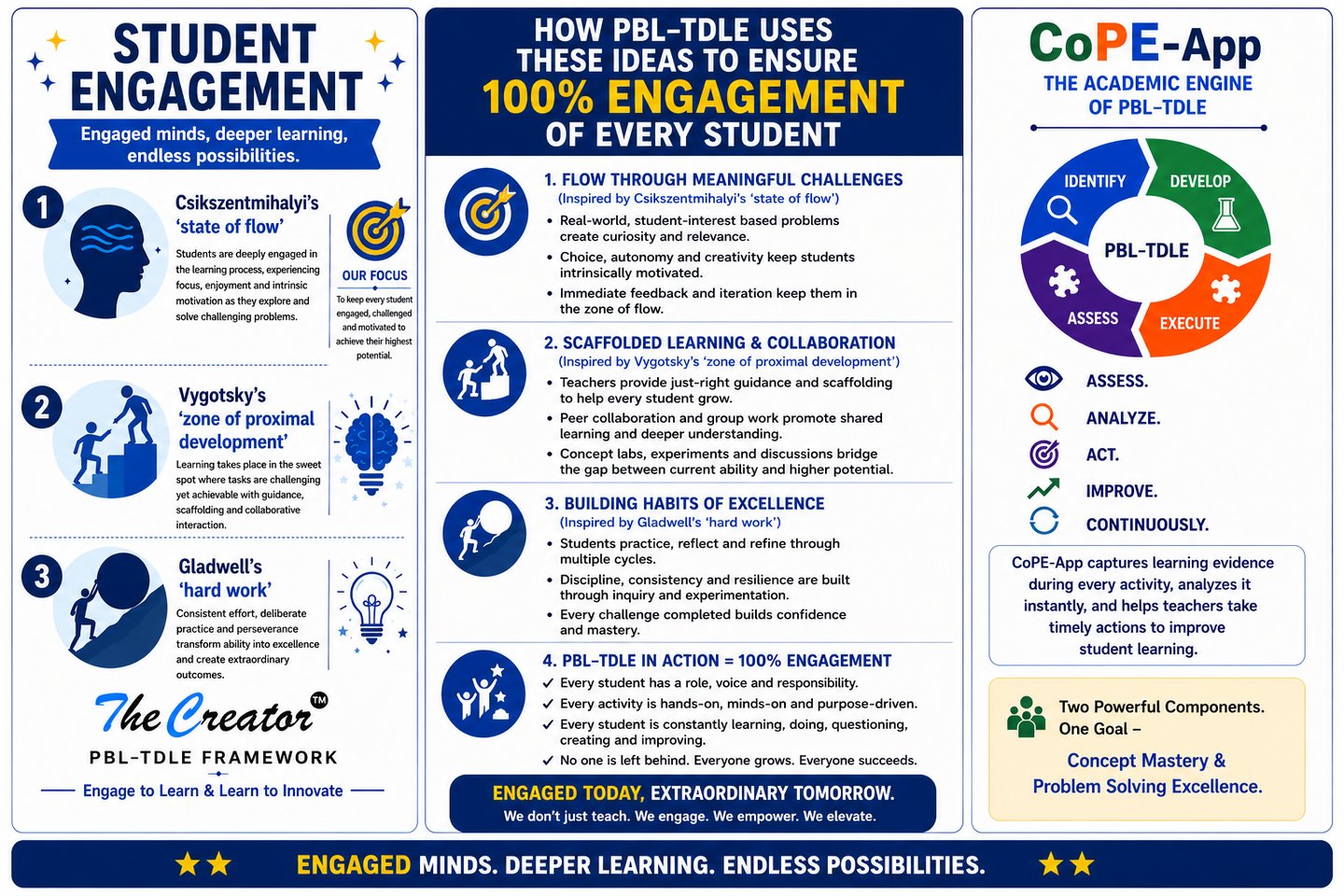
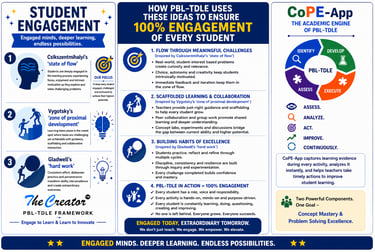
PBL-TDLE is based on the fundamental principle that every student who actively engages in learning can develop concepts and become a successful problem solver, irrespective of their inherent talent or starting ability.
Evidence
Most importantly, the PBL-TDLE philosophy has not remained merely a theoretical proposition. We have consistently demonstrated its effectiveness through the achievements of our students across national and international platforms. Our outcomes clearly indicate that student engagement, concept mastery, and systematic problem-solving training are far more important determinants of success than inherent talent or prior ability.
Evidence of Success:
100% of our students in the last two academic years received admission offers from leading universities in the United Kingdom and the United States for science and engineering programs.
The entire class received international medals in the British Physics Olympiad (BPhO), demonstrating that high-level scientific problem-solving ability can be developed across an entire cohort of students.
Eight out of thirteen students received the Outstanding Achievement Award in the American Mathematics Competition (AMC), reflecting exceptional mathematical reasoning and problem-solving capabilities.
Approximately 80% of students from Grades 6 to 10 received international medals in the British Physics Olympiad, further establishing that advanced scientific thinking and problem-solving skills can be developed at an early age through appropriate engagement and pedagogy.
These outcomes provide strong empirical evidence that academic excellence, concept mastery, and advanced problem-solving abilities are not exclusive to a small group of naturally gifted students. Rather, they can be systematically developed in every student through sustained engagement, active learning, scientific investigation, deliberate practice, and continuous mentorship.
PBL-TDLE therefore shifts the focus of education from identifying talented students to creating learning environments in which every student can succeed. It transforms classrooms into spaces where engagement leads to concept development, concept development leads to problem solving, and problem solving leads to innovation, research, and lifelong learning.
Engagement, Not Talent
At its core, PBL-TDLE affirms a simple but powerful belief
Every student can learn. Every student can develop concepts. Every student can become a successful problem solver. Engagement, not inherent talent, is the true foundation of excellence.
Deep Engagement Creates Deep Learning
"No Concept Mastery → No Problem Solving → No Innovation"
Surface Learning vs Fundamental Learning
For example, a student who simply memorizes the statement “light travels in a straight line” has only achieved surface learning. The concept may be reproduced in an examination, but it is not deeply understood. However, a student who investigates and verifies this concept through experiments, observes real evidence, explains the phenomenon in their own words, and applies it to shadows, pinhole cameras, eclipses, or optical systems develops fundamental learning. The concept becomes meaningful, connected, and usable.
This is the central philosophy of TDLE. Every important scientific and mathematical concept is developed through demonstrations, experiments, observations, measurements, data analysis, interpretation, and application. Students do not simply “hear” science and mathematics. They experience, investigate, and verify them.
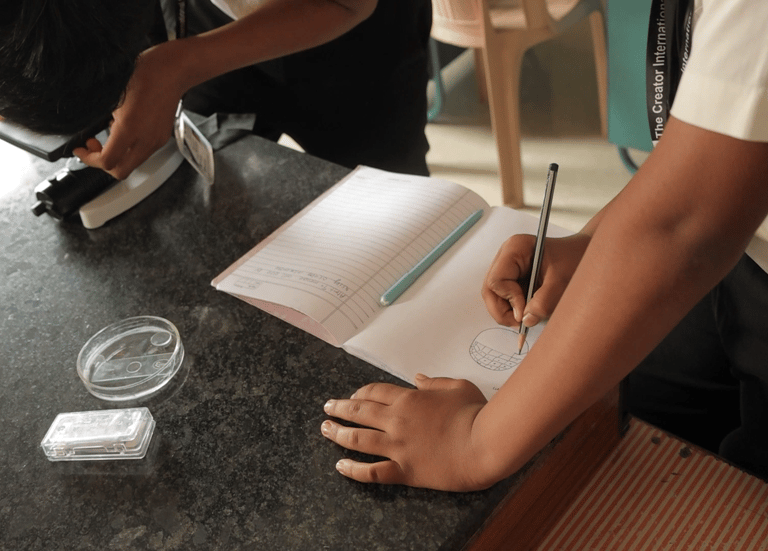
Deep Engagement Creates Deep Learning
Passive chalk-and-talk methods used only for delivery of content do not assure learning of even a single student for each and every concept. In TDLE, concepts are investigated, verified, discussed, and applied through continuous experimental engagement, the PBL-TDLE framework makes it possible to ensure that every student develops each and every concept effectively and meaningfully throughout K–12 education.
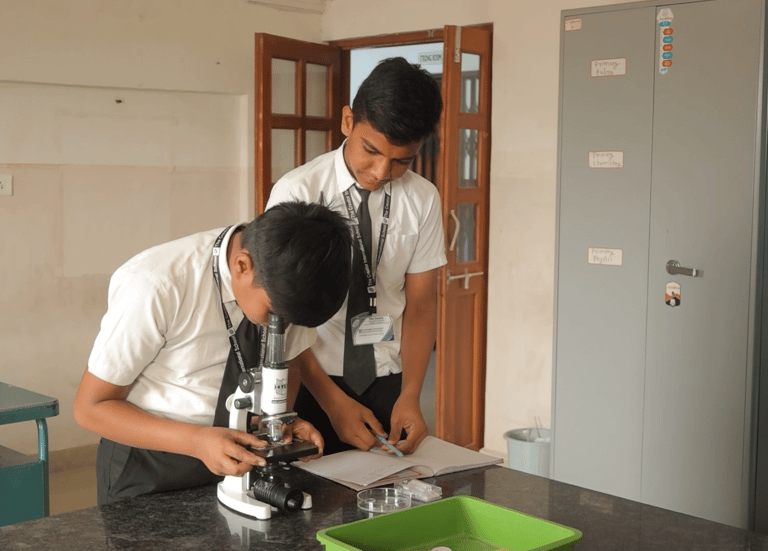
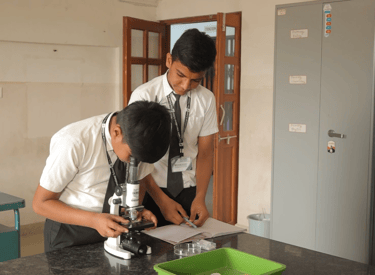
When Every Student Is Engaged, Every Student Learns.
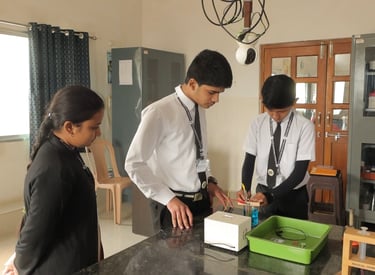
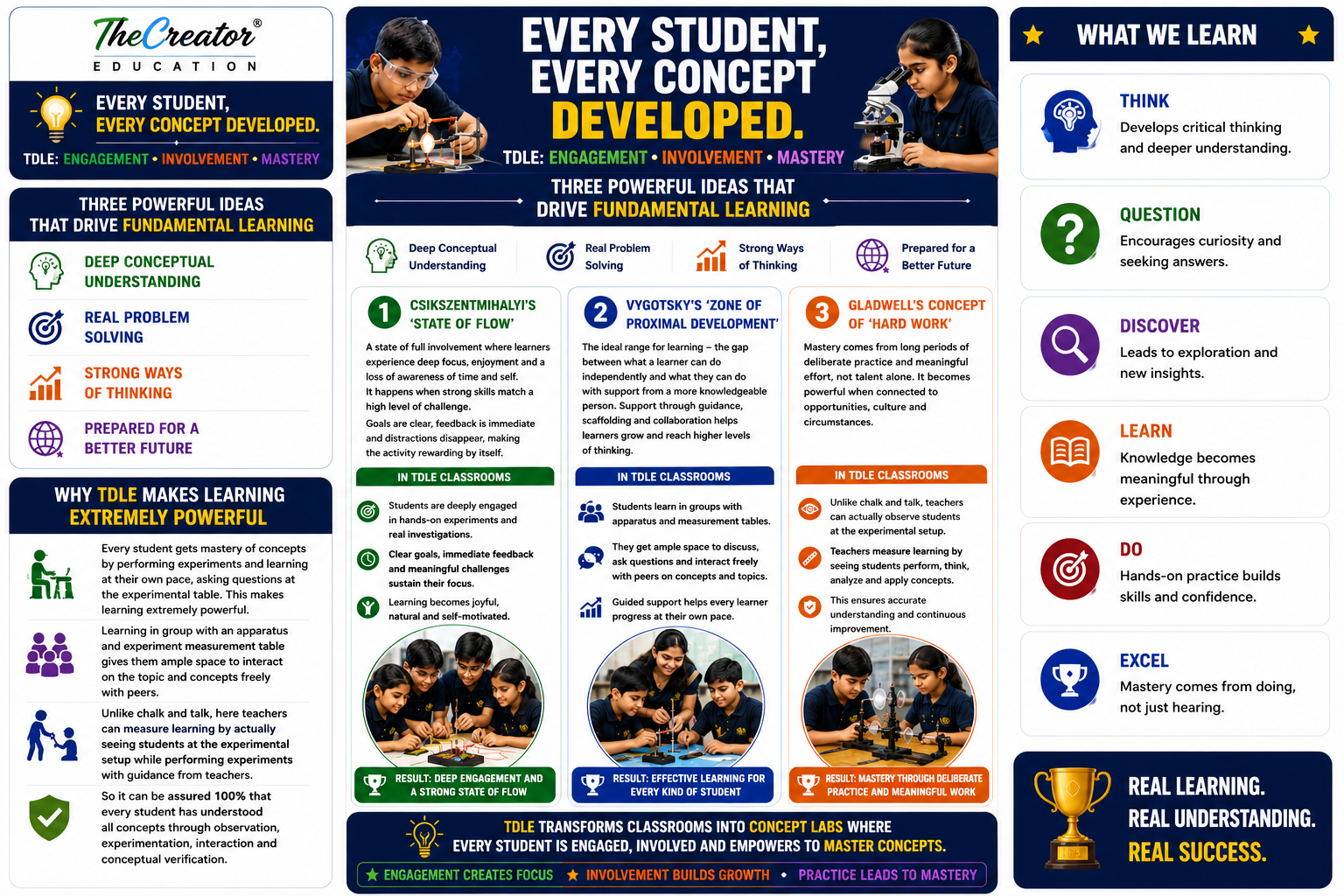
Unlike passive chalk-and-talk classrooms, students here learn by performing experiments themselves using global-standard scientific apparatus and carefully designed experimental activities. Every student works at the experimental table, performs measurements, observes outcomes, asks questions, discusses concepts with peers and teachers, and learns at their own pace. This deep involvement makes learning highly powerful, meaningful, and long-lasting.
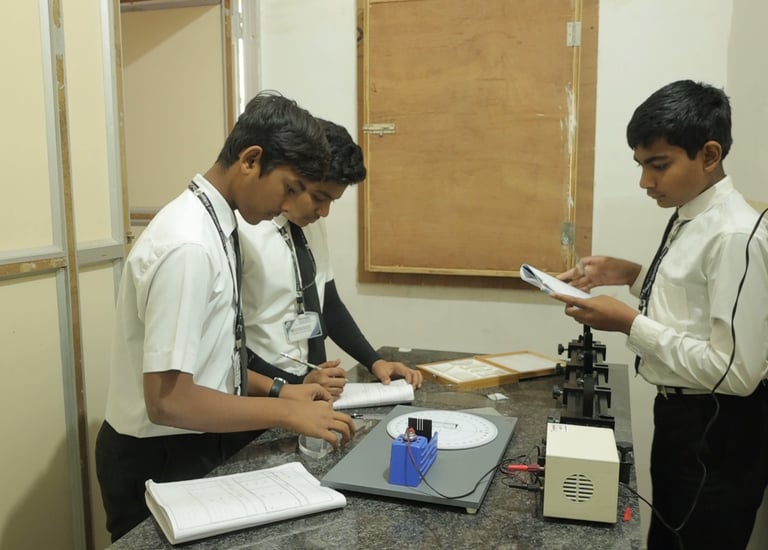
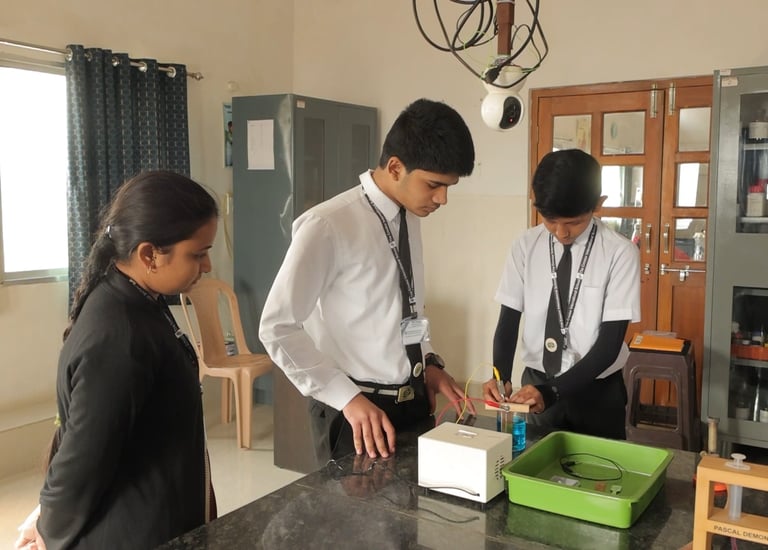
Ensuring Learning for Every Student in the Classroom Itself.
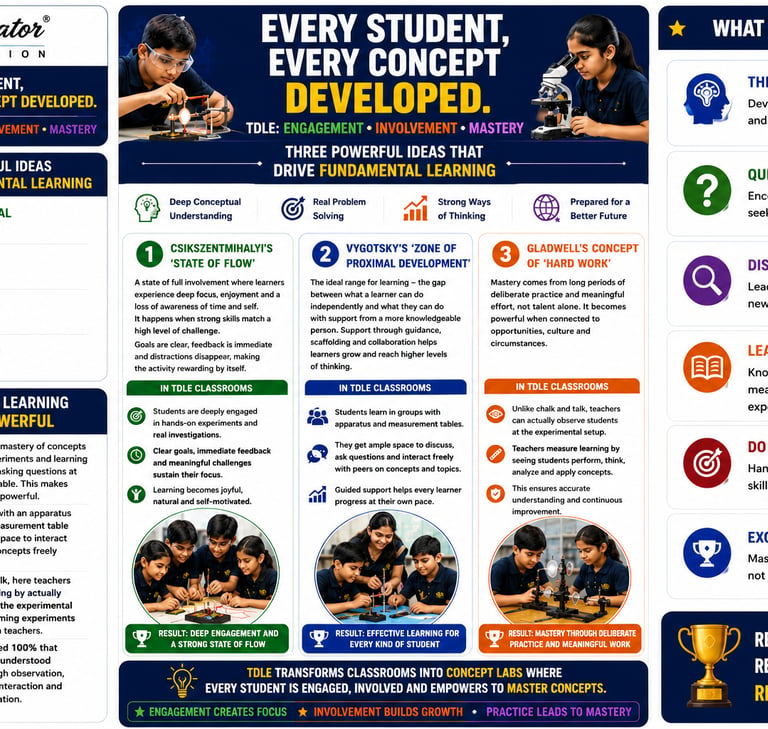
Students perform experiments themselves using global-standard scientific apparatus, learn at their own pace, ask questions at experimental tables, and work collaboratively in groups. This highly engaging environment creates deep involvement, a strong “state of flow,” and supports the “Zone of Proximal Development,” where students learn effectively through peer interaction and guided demonstrations..
Learning That Can Be Seen, Verified and Measured
Most importantly, unlike traditional Chalk-and-Talk methodolgy where understanding is difficult to measure, teachers in TDLE classrooms can continuously observe students directly at the experimental setup while they perform investigations, make observations, analyze data, and apply concepts. This allows teachers to immediately identify conceptual gaps, guide students individually, and ensure that learning is truly taking place.
→
→
Human beings naturally learn skills through demonstrations, experiments, and practice. Every important skill in life such as walking, speaking, reading, writing, swimming, driving, or playing sports is learned through this cycle, not through passive listening or watching alone. The human brain can truly apply learning only when it is experienced.
Learning through the cycle of “Demonstration–Experiment–Practice” is what makes it possible to apply concepts in real-life situations. True understanding develops only when learners actively experience concepts through observation, experimentation, investigation, and repeated practice. We cannot effectively apply concepts in real life through passive listening or memorization alone.
The PBL-TDLE framework follows this natural process of learning by transforming classrooms into highly engaging Concept Labs where students continuously perform experiments, make observations, take measurements, analyze data, discuss concepts, and solve problems collaboratively maintaining the Demo-Experiment & Practice Cycle. This hands-on environment keeps both introverted and extroverted students mentally active, involved, and connected to learning.
Through continuous experimental investigation and collaborative learning, students develop strong conceptual understanding, analytical thinking, real-world problem-solving ability, and meaningful long-term learning throughout K–12 education.
The Natural Cycle of Learning
How PBL-TDLE is a Natural Way of Learning
Fundamental Learning
At THECREATOR Education, the PBL-TDLE framework is designed around the idea of fundamental learning. In fundamental learning, engagement is not just paying attention in class. True learning happens when students are deeply involved in investigation, experimentation, observation, discussion, analysis, and problem solving. When students actively work with ideas instead of memorizing words, concepts become part of their natural way of thinking. This leads to real concept mastery and meaningful problem-solving ability.
Teaching by Demonstrations and Learning by Experiments (TDLE) creates this kind of deep involvement by transforming classrooms into Concept Labs where students perform experiments, make measurements, analyze data, interpret results, and apply concepts to complex problems every day. This immersive environment strongly aligns with some of the most important theories of learning and human development.
Learning Through Investigation and Application
For each and every subtopic within a chapter or unit, a detailed list of concepts is developed and also collected from students to identify the concepts that need to be understood and mastered. These concepts are then live demonstrated by the teacher using global-standard scientific apparatus and specially designed experiments.
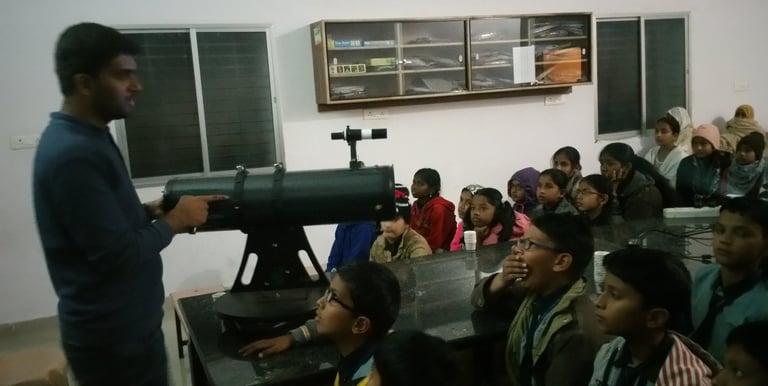
During these demonstrations, students observe the complete scientific process, including observations, measurements, data recording, data analysis, graphing, interpretation of results, and conclusions. The teacher explains every concept by actually performing the experiment and making real measurements in front of the students.
This process of concept development through live experimental investigation is called Demonstration in the PBL-TDLE framework.
Teacher Demonstrates to show concepts
Students Experiments to Verify concepts
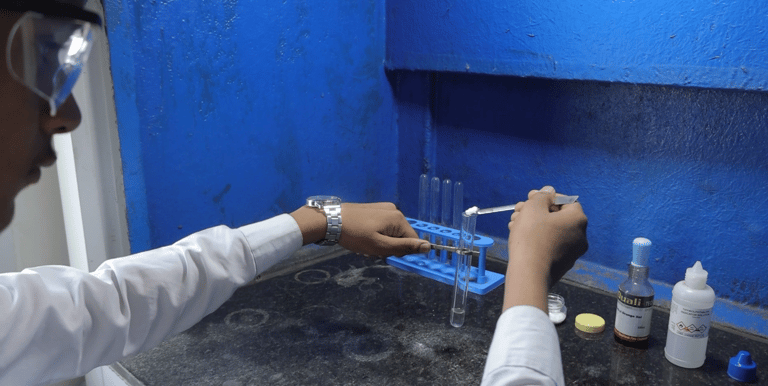
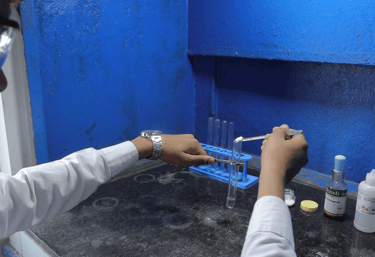
In Learning by Experiments, students perform the same experiments themselves by following all scientific steps to investigate and verify each and every concept independently. They make observations, perform measurements, record data, carry out calculations, analyze data, draw graphs, interpret results, and arrive at conclusions through their own experimental investigation.
During this process, students continuously interact with teachers and peers to ask questions, clarify doubts, and ensure that every concept is properly developed, understood, and experimentally verified. This active involvement transforms students from passive listeners into active learners, making concept mastery deep, meaningful, and long-lasting..
Learning by Experiments
Students investigate and verify concepts by performing experiments themselves through observations, measurements, analysis, and interpretation.
Teaching by Demonstration
Teachers explain concepts by performing real experiments and investigations in front of students.
Join THECREATOR Education
Get updates on PBL-TDLE modules